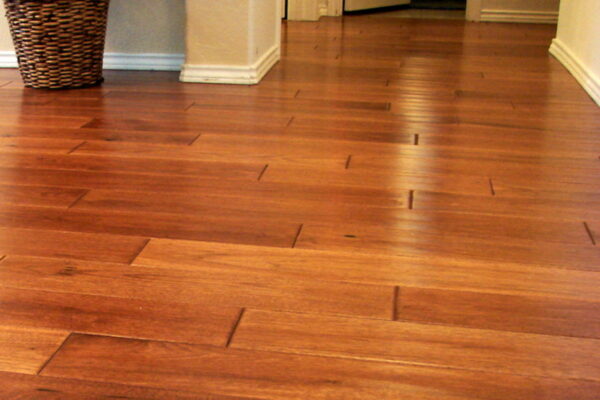
Walk into most capes and colonials around South Portland, Cape Elizabeth, or Scarborough and there's a decent chance original hardwood is hiding under decades-old carpet in at least one room. Deciding between engineered hardwood and solid hardwood - or refinishing what's already there - comes down to your home's age, its subfloor, and how much our coastal humidity swings affect that particular room.
The Core Difference
Solid hardwood is exactly what it sounds like - a single piece of wood, typically 3/4 inch thick, that can be sanded and refinished many times over its life. Engineered hardwood has a real hardwood wear layer bonded over a cross-layered plywood core, which makes it far more dimensionally stable. That construction difference is the whole story behind which one makes sense where in a Maine home.
Why Coastal Humidity Favors Engineered in Most Rooms
Greater Portland's climate swings hard - dry, overheated winter air followed by humid summers off Casco Bay - and solid wood expands and contracts with every swing. In an old farmhouse with a crawlspace, or a colonial near the water in Cape Elizabeth, that movement is more pronounced. Engineered hardwood's plywood core resists that movement, which means tighter seams, less seasonal gapping, and a floor that holds up better over the long run in most of the rooms we work in around here.
When Solid Hardwood Still Makes Sense
Solid hardwood is still the right call in plenty of Greater Portland homes - especially a well-maintained cape or colonial with a dry, conditioned basement or a crawlspace with good moisture control. It can be sanded down and refinished multiple times over decades, which appeals to homeowners planning to stay put for the long haul, and it's often the more historically accurate choice for an older farmhouse where matching original character matters.
Where Neither Works: Basements and Slab
Solid hardwood generally shouldn't go below grade at all, and even engineered needs a good moisture barrier over a concrete slab. For finished basements common in South Portland's older housing stock, we usually point homeowners toward luxury vinyl plank or tile instead - both handle a damp Maine basement without the risk.
What This Looks Like House to House
A 1920s cape near the water in Cape Elizabeth, a center-hall colonial in Scarborough, and a farmhouse further inland in Standish don't hold humidity the same way, even though they're all a short drive from our South Portland showroom. Homes closer to the coast tend to see bigger summer humidity spikes; homes with newer, tighter insulation can actually run drier in winter than an old farmhouse with original single-pane windows. That's part of why we walk every room in person rather than quoting hardwood over the phone.
Refinishing vs. Replacing: How to Decide
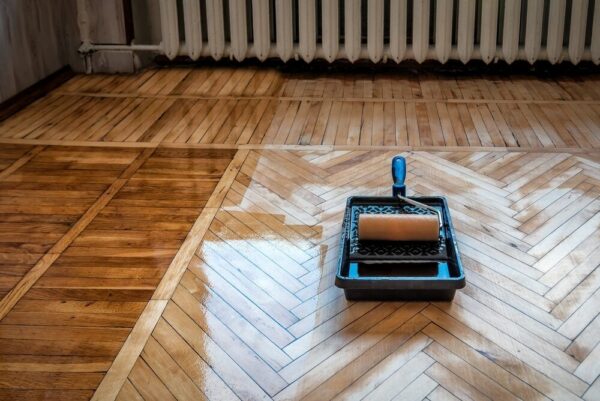
If the hardwood under your old carpet is solid wood with enough thickness left for at least one more sanding, refinishing is almost always the more cost-effective move - and it's the option that keeps a farmhouse or colonial's original floors intact. Engineered hardwood, by contrast, usually can't be sanded more than once or twice because its real-wood wear layer is thinner. We'll check the wear layer or board thickness during your free estimate and tell you honestly which route makes sense before you spend a dollar.
Don't Rule Out What's Already Under Your Carpet
Before you budget for all-new flooring, it's worth checking what's underneath any wall-to-wall carpet in an older Greater Portland home - original hardwood from a cape or colonial built decades ago is often still there, just worn and covered up. If it's solid wood in reasonable shape, refinishing can bring it back for a fraction of the cost of new flooring, and it keeps the house's original character intact.
Making the Call for Your Home
The right answer depends on the room, the subfloor underneath it, and how much humidity swing that part of your house actually sees - not a blanket rule. We look at all of that during a free in-home visit, tell you honestly whether engineered or solid hardwood is the better fit - or whether the floor you already have is worth saving - and quote the install straight.
Let's Look at What You've Got
Whether you're weighing engineered against solid or wondering what's hiding under an old carpet, we've been walking Greater Portland homeowners through this exact decision from our South Portland showroom since 1986. See what neighbors say about the process on our reviews page, or schedule a free in-home estimate and we'll bring samples and give you a straight answer.