Ask any longtime South Portland homeowner what their floors go through each year and you'll hear the same list: dry, overheated winter air that can crack a solid hardwood board, months of salt and sand tracked in from icy front steps, and then a flip into humid, sticky coastal summers off Casco Bay. Flooring that looks great in a showroom doesn't always hold up to that swing. Here's how carpet, hardwood, engineered hardwood, luxury vinyl plank, tile, and laminate each actually perform in a Greater Portland home.
Why Maine's Climate Is Genuinely Tough on Floors
Central heating in a Maine winter can pull indoor humidity down into the teens, drying out solid hardwood until the boards shrink and gap. Come July and August, that same house can sit at 60-70% relative humidity with the windows open to a coastal breeze, and the wood swells back. That expansion-and-contraction cycle, repeated every year for decades, is one of the biggest factors in how well a floor holds up. On top of that, six-plus months of the year bring snow, slush, sand, and calcium chloride ice melt across every entryway - abrasive stuff that can dull a finish or discolor grout if it isn't wiped up promptly.
Carpet
Carpet handles the temperature swings fine - fiber doesn't expand and contract like wood - but it's the worst match for wet, salty boots. Salt residue and moisture work into the pile and pad, and fully drying it out in a damp Maine basement can take a while. We still recommend carpet for bedrooms, stairs, and family rooms where comfort matters more than moisture exposure; just keep it away from the mudroom.
Solid Hardwood
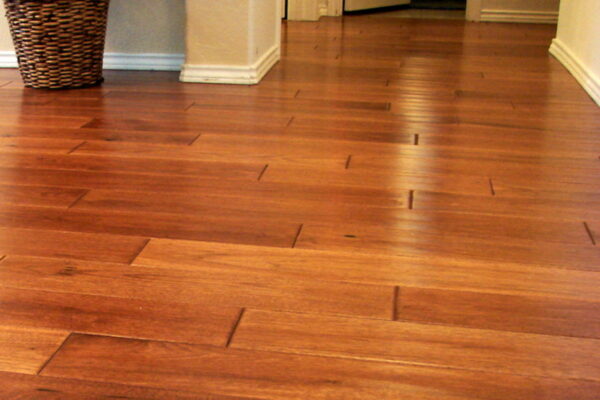
Solid hardwood is beautiful, and it's what's original to most capes, colonials, and farmhouses around Portland - but it's the most sensitive of the five to our humidity swings. Wide-plank solid floors in older homes often show seasonal gapping in January and February that mostly closes back up by summer. That's normal, but it's worth budgeting for a bit of movement, and it's a big reason we rarely recommend solid hardwood in a basement or a room with a lot of plumbing nearby.
Engineered Hardwood
Engineered hardwood solves most of that problem. Its plywood core is cross-layered, so it moves far less with humidity than solid wood, which makes it a better fit for South Portland's swing between bone-dry winters and humid summers. It also installs over slab and in below-grade spaces where solid hardwood generally can't go. For most of the older homes we work in around the Greater Portland area, engineered is the more stable, lower-maintenance choice without giving up the real-wood look.
Luxury Vinyl Plank
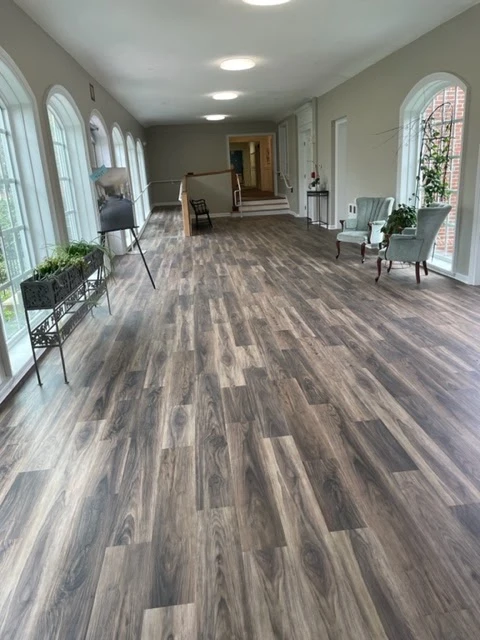
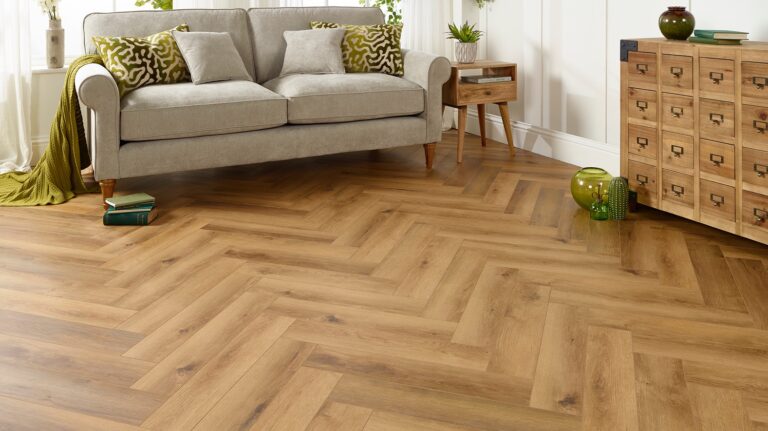
Luxury vinyl plank doesn't care about humidity at all, and it's fully waterproof, which makes it the most forgiving option on this list for a Maine winter. Salt, sand, and slush wipe right off, and it won't swell, crack, or stain the way wood can. It's become our go-to recommendation for mudrooms, kitchens, and basements across South Portland, Scarborough, and Cape Elizabeth.
Tile
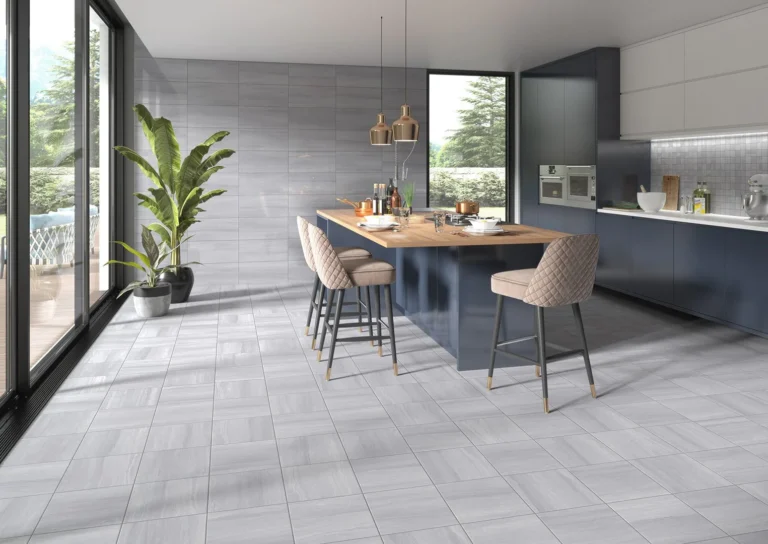
Tile is completely unaffected by humidity and stands up to salt, water, and grit better than anything else we sell. The tradeoff is that it's a cold, hard surface underfoot in a January mudroom - many homeowners pair it with a radiant heat mat for that reason. It's an excellent choice for entryways, bathrooms, and kitchens where durability matters more than warmth.
Laminate
Laminate holds up reasonably well to Maine's humidity swings once it's acclimated to the room, but its wood-fiber core still isn't a good match for standing water or repeated wet-boot traffic. We recommend it for bedrooms, home offices, and other dry, low-traffic rooms where you want a wood look on a tighter budget - not for the entryway.
Basements Deserve Special Attention
Basements are where Maine's climate really tests a floor. Below-grade concrete holds moisture year-round, and older Greater Portland foundations without a proper vapor barrier can push humidity up through the slab even after a full renovation. Solid hardwood and laminate are both out for that reason - their wood-based cores just can't handle sustained ground moisture. Luxury vinyl plank and tile, installed over a proper vapor barrier, are the two materials we install in basements with real confidence, and engineered hardwood can work with the right underlayment if the space stays consistently dry.
| Flooring Type | Humidity Swings | Salt & Snowmelt | Best Rooms in a Maine Home |
|---|---|---|---|
| Carpet | Handles well | Poor - traps salt & moisture | Bedrooms, stairs |
| Solid Hardwood | Sensitive - seasonal gapping | Poor | Living & dining rooms, above grade |
| Engineered Hardwood | Handles well | Fair with rugs/mats | Living areas, over slab, below grade |
| Luxury Vinyl Plank | Unaffected | Excellent | Mudrooms, kitchens, basements |
| Tile | Unaffected | Excellent | Entryways, baths, kitchens |
| Laminate | Handles reasonably well | Poor | Bedrooms, offices, dry rooms |
Our Recommendation for Entries and Mudrooms
If we had to pick just three materials for the parts of a Greater Portland home that take the worst of winter, it's engineered hardwood for the living areas that flow into an entry, luxury vinyl plank for the mudroom and kitchen, and tile for anywhere boots come off right at the door. All three shrug off salt and moisture instead of fighting it, which means fewer repairs and a floor that still looks new after its tenth Maine winter.
Let Us Match the Material to Your Home
Every house holds moisture and heat a little differently, and the right recommendation depends on your specific rooms, subfloor, and how the family actually uses the space. Bring us your floor plan and we'll walk you through what will actually hold up - see what your neighbors say about the process on our reviews page, or schedule a free in-home estimate and we'll bring samples built for exactly this climate.