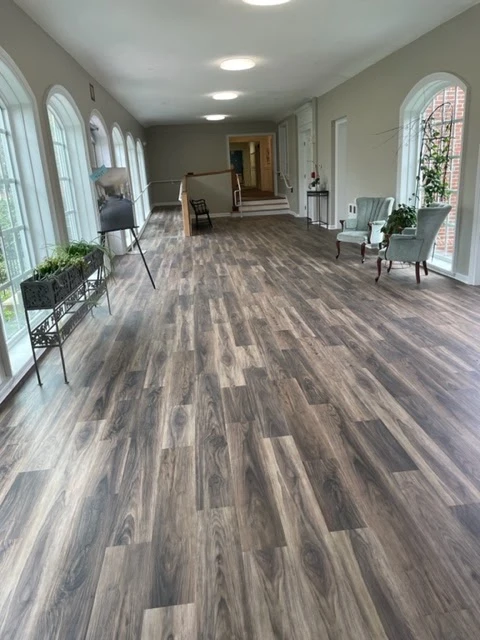
Pull back the carpet in a lot of South Portland capes, Portland colonials, and old mill-town triple-deckers and you'll find something the original owners never meant to be covered up: solid oak or maple hardwood, laid decades ago and hidden under wall-to-wall carpet sometime in the 60s, 70s, or 80s. If your home was built before, say, 1960, there's a real chance the floor under your carpet is worth uncovering rather than replacing. Here's how to tell, and what hardwood refinishing actually involves.
How to Tell What's Under Your Carpet
The easiest way to check is to pull carpet from a closet floor or from under a heat register, where it's least noticeable if you're wrong. Solid hardwood was standard in New England homes well into the mid-20th century, and it was common practice to carpet over perfectly good oak or maple floors rather than replace them - it was cheaper and it was the style at the time. If you see tongue-and-groove strip flooring, narrow boards, and staples or tack strip around the edges instead of glued-down flooring, there's a good chance you've got real hardwood worth saving underneath.
The condition varies. Sun-faded boards near windows, water stains near old radiators, and gouges from decades of furniture are all normal and almost always fixable with a full sand and refinish. What a refinishing pro will check first is board thickness (solid hardwood can typically be sanded down several times over its life) and whether there's been water damage severe enough to cup or rot the wood, which is rarer but does happen near old plumbing or a leaky roof.
Dustless Sanding: Why It Matters in an Occupied Home
Older-style floor sanding kicked up enormous amounts of fine dust that settled into every room in the house for weeks. Dustless sanding equipment connects the sander directly to a high-powered vacuum system, capturing the vast majority of dust as it's created instead of letting it spread through your ductwork and settle on every surface. It's a meaningfully cleaner process, which matters a lot in a home you're still living in during the project - and it means less post-project cleanup for you.
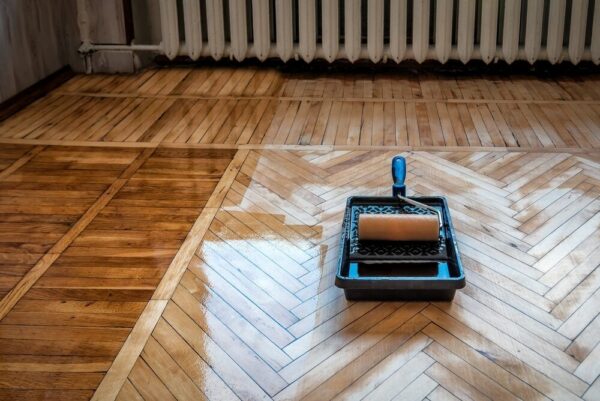
The process itself is straightforward: the old finish and top layer of wood are sanded off in progressively finer passes, any damaged boards are cut out and replaced with matched wood, gaps and nail holes are filled, then stain (if you're changing the color) and several coats of protective finish go on, each one lightly sanded between coats. A typical room takes a few days from start to a fully cured floor, factoring in dry time between coats.
Stain Matching: The Part That Separates a Good Job from a Great One
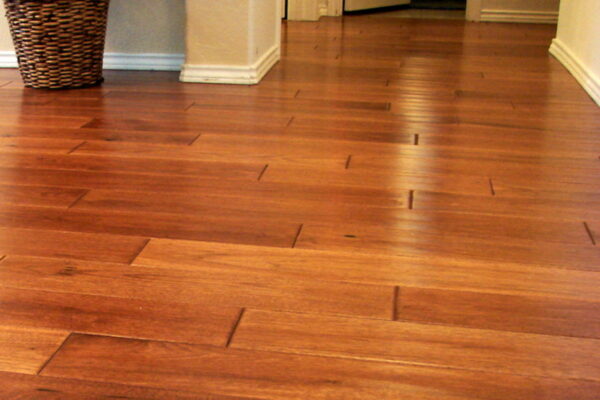
If you're refinishing an entire connected space - say, a living room and dining room that share one continuous floor - getting an even, consistent color across the whole area is the single hardest part of the job, especially where old boards meet any new or patched-in wood. Oak and maple take stain differently, older growth wood can be denser than replacement boards, and decades of sunlight exposure change how a board absorbs color. A careful refinisher will test stain on a hidden section - inside a closet or under where a rug will sit - before committing to the whole floor, and it's worth judging samples in natural light, not just under a lamp, since Maine's grey winter light reads very differently than a bright June afternoon.
Living With Maine's Seasons Once the Floor Is Done
One more thing worth knowing before you commit: solid hardwood expands and contracts with Maine's humidity swings, from bone-dry winter heat to muggy coastal summers off Casco Bay. A properly acclimated, well-finished floor handles this fine - a small, even gap in January that closes back up by August is normal, not a defect. Real problems like cupping or buckling usually trace back to a floor that was over-fastened or finished before it acclimated to your specific house.
Higgins Carpet One Floor & Home has been installing flooring in Greater Portland homes since 1986. If the wood under your carpet turns out to be too worn, water-damaged, or patched to save, we can help you choose new hardwood or engineered hardwood that suits the house. Read what neighbors across our service area say on our reviews page, then schedule a free in-home estimate.