Once the first real snow hits Greater Portland, the floors inside your front door start a months-long fight with sand, ice melt, and meltwater. Choosing the right material helps, but day-to-day care is what keeps a floor looking good by April. Here's a simple routine you can follow all winter, broken down by floor type.
Start at the Door
The most effective floor care happens before dirt gets inside. A coarse outdoor mat knocks off snow and sand, and an absorbent indoor mat catches what's left. Give boots a dedicated tray instead of letting them drip on the floor. In most homes, those two mats and a boot tray noticeably cut down the grit reaching your hallway - and grit is what scratches finishes and wears down carpet fibers over time.
- Daily: shake out mats and wipe up puddles near the entry.
- Twice a week: vacuum or sweep the high-traffic paths.
- Weekly: damp-mop hard floors with a cleaner made for that surface.
- Monthly: lift mats and check for trapped moisture underneath.
Hardwood and Engineered Wood
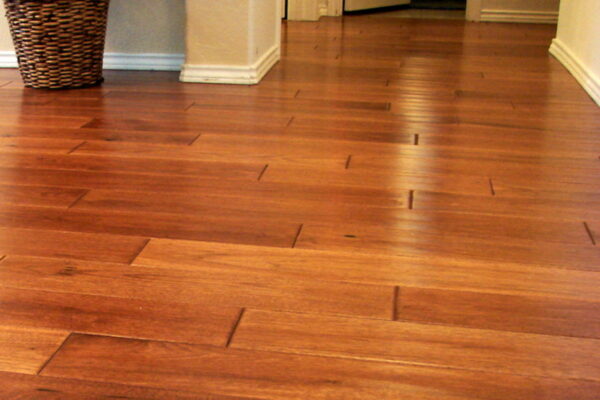
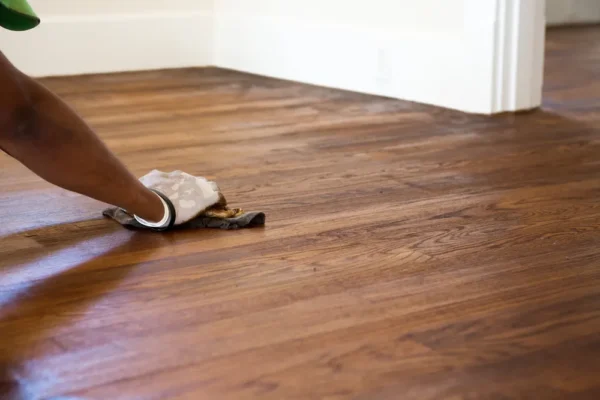
Sweep or vacuum with the beater bar turned off a few times a week in winter, since sand acts like sandpaper underfoot. Follow with a lightly damp microfiber mop and a cleaner made for finished wood - never a soaking-wet mop or a steam cleaner. If you see white residue from ice melt, wipe it up the same day. Heating season also pulls moisture out of hardwood, so many homeowners run a humidifier to limit seasonal gaps between boards.
Luxury Vinyl, Laminate, and Tile
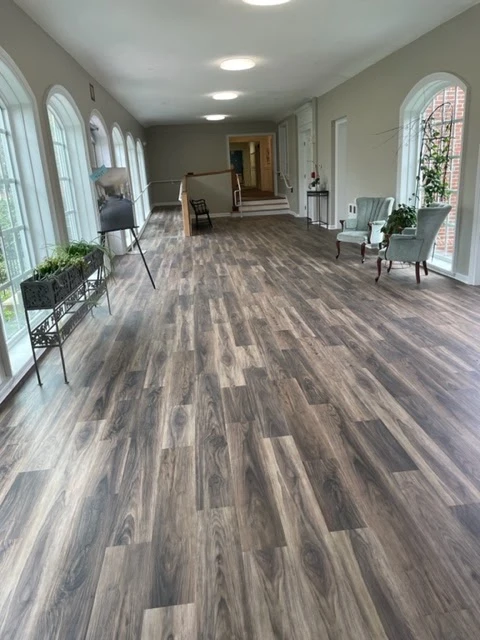
Luxury vinyl plank and tile shrug off water better than wood, but salt residue can still leave a dull film. Vacuum or sweep first, then damp-mop with a pH-neutral cleaner. Laminate calls for a little more caution: use a barely damp mop and don't let puddles from boots sit on the seams. With tile, keep an eye on the grout lines near the door, which can darken if salty water dries there again and again.
Carpet in Winter
Carpet near entries collects the fine sand that gets past your mats. Vacuum high-traffic paths often, and blot - don't rub - any salty slush that makes it onto the pile. Letting damp spots dry fully before they're walked on again helps prevent rings and matting.
Is your entry floor ready for another winter?
Get a free in-home estimateIf your entry flooring is already worn past the point where cleaning helps, it may be time for something better suited to Maine winters - our post on mudroom and entryway flooring compares the options. Questions about caring for a floor you bought from us? Call the showroom or contact us anytime.